


Forge Your Path to Hügelkultur
Blazing Trail: Forge Your Path to Hügelkultur – Slash Watering by 50% and Build Resilient Gardens on a Budget!
What if your garden could survive a month without rain? What if your yard waste could slash your watering needs by 50% in scorching summers, while building soil that thrives for 5-20 years? Enter Hügelkultur, the ultimate trailblazing hack for gardeners! Hey there, fellow adventurers and green thumbs! Welcome back to Blazing Trail, where we pioneer nature's smartest paths to make gardening exhilarating, affordable, and resilient. Today, we're charting a course through Hügelkultur (pronounced "hoo-gul-culture" – say it with gusto!). Like forging a new trail in the wilderness, this method turns fallen branches into fertile frontiers. We'll break it down with joyful energy, explain the science, and add our unique Blazing Trail twists for 2025's hotter climates. Ready to blaze your garden trail? Let's dive in!
Imagine Sarah, a busy mom and weekend hiker, who transformed her storm-damaged yard into a veggie oasis using Hügelkultur. Starting with free logs, she saved hundreds on soil and watched her harvest explode, all while sipping coffee on her porch. That's the adventure we're embarking on!
What is Hügelkultur? Pioneering Permaculture Adventure
Hügelkultur, a permaculture gem from Eastern Europe and Germany, meaning "hill culture," was pioneered by Austrian permaculture expert Sepp Holzer, drawing inspiration from natural forest decay processes. It mimics forest floors where logs and leaves decay into rich soil. Layer organic materials, with woody bases first, in raised beds for a self-sustaining powerhouse that nourishes plants for years.
Why the thrill? Decomposition, the biological breakdown of organic materials into simpler compounds by microbes, fungi, and earthworms, releases nutrients, draws in microbes and fungi, and warms the bed by 2-5°C to stretch seasons. It's eco-warrior stuff: Recycle waste, dodge landfills. In 2025, amid rising heatwaves, it's your climate shield!
Bountiful Benefits: Why Hügelkultur Fuels Your Trailblazing Spirit
Celebrate these perks that turn gardening into an epic quest:
- Budget Triumph: Use free materials to cut costs, from hundreds to zilch for large beds!
- Water Mastery: Wood sponges up moisture, slashing watering by up to 50% and retaining 80% more in arid spots. Ideal for dry spells or trail-weary gardeners craving more downtime.
- Nutrient Quest: Slow nutrient release, through gradual transfer of elements like nitrogen, phosphorus, and potassium from decaying wood, builds vibrant soil, boosting plants, curbing pests – no chemicals needed.
- Eco Adventure: Invite worms and fungi to aerate and enrich – a biodiversity bash underground! This fosters a "soil web of life" with mycelium networks connecting plants for nutrient sharing.
- Easy Expedition: Minimal weeding or tilling post-setup; perfect for novices charting their first garden path.
- Climate Resilience: Beds create microclimates for diverse planting and act as natural sponges, reducing runoff and filtering pollutants in urban or flood-prone areas.
- Carbon Sequestration: Locks away carbon from woody waste for decades, helping mitigate climate change on a small scale.
Extra nugget: In Australia, opt for eucalyptus or acacia for tough decay. Skip cedar or walnut to avoid growth inhibitors. Beyond that, prefer softwoods like alder, apple, cottonwood, or birch for faster decomposition; avoid black walnut (produces juglone, a toxin inhibiting plant growth), cedar (natural pesticides harm microbes), or black locust (too dense and slow-rotting).
For balance, here's a quick pros/cons table:
| Pros | Cons |
|---|---|
| Superior water retention in hot climates | Initial setup requires effort and space |
| Long-term fertility (5-20 years) | May attract termites or rodents in prone areas – monitor! |
| Eco-friendly waste recycling | Settling over time; avoid deep roots year one |
| Low maintenance after year 1 | Not ideal for very shallow beds |
| Carbon sequestration | Potential rodent attraction |
| Climate resilience and microclimates |
Step-by-Step Guide: Chart Your Hügelkultur Course with Science and Spark
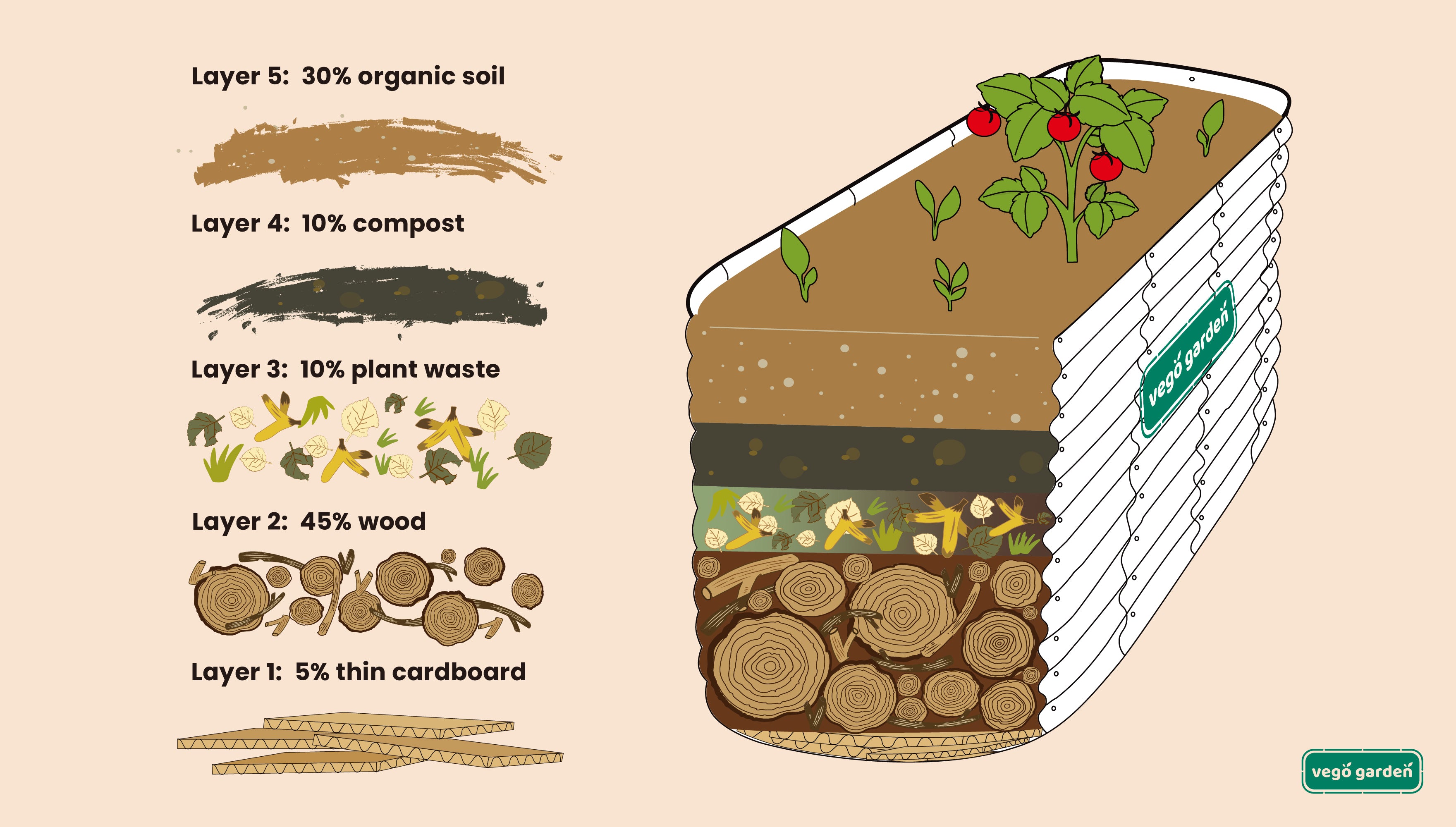
Time to build! Like layering a trail mix for plants, this lasagna method suits larger, deeper beds! We've crafted this guide with science-backed whys and extras. Beginners: If termites lurk, elevate beds or use hardwoods. Encourage readers to start small (e.g., 2-foot-tall beds) and scale up annually to build confidence.
Preparation
- Base Prep (Optional, but recommended): Line with soaked cardboard or newspaper. Why? Smothers weeds, adds decomposing matter for soil boost. Science: Breaks down into humus, the dark, stable organic matter that binds soil particles, retains water (up to 80% more), and buffers pH to 6-7 for optimal plant growth.
Building Layers
- Woody Core (Your Adventure Backbone): Stack big logs bottom-up, then branches/twigs – 40-45% of bed. Soak well. Why? Rots into a water reservoir, releasing nutrients slowly and heating via microbial activity, the work of bacteria, fungi, and other microorganisms in decomposing matter (2-5°C warmer, or up to 10°F/5.5°C in early spring, extending the growing season by 2-4 weeks in temperate zones). Prevents heavy settling. Pro: Use decayed wood for quicker magic or fresh-cut wood inoculated with fungi (e.g., shiitake mushrooms) for added benefits like edible yields; ALWAYS avoid treated stuff.
- Nitrogen Kickstart: Add manure, clippings, scraps, 10-25%. Why? Balances carbon-rich wood, averting early nutrient tie-up (where microbes temporarily tie up nitrogen while breaking down carbon-rich wood). Microbes thrive, speeding fertility. Extra: Toss in coffee grounds or peels, this is nitrogen dynamite! Suggest adding more nitrogen sources like legumes or blood meal in year 1 to prevent stunted growth.
- Lasagna Build: Alternate browns (leaves/straw) and greens (scraps/clippings) – another 1/3. Water layers. Why? Creates aerated, compost-like soil through in-situ composting, on-site decay of layered organics, fostering earthworm activity (castings add nutrients) and reducing waste; browns fight compaction, greens accelerate decay. Over time, pH hits the ideal 6-7. Breakdown: 20% branches, 25% waste – your success recipe!
Planting & Finishing
- Summit Topper: Cap with 30% organic soil/compost mix, plus mulch space. Why? Instant plant nutrition as the depths mature. Mulch locks moisture, weeds out foes. Insight: pH test post-build, naturally balances for peak growth.
Variant for in-ground hugels: Dig a 2-3 foot trench for better moisture in dry climates, then layer as usual. For small spaces, use keyhole designs (U-shaped for easy access); for large areas, terrace on slopes to create frost pockets that cool in summer heat. Introduce hybrids, add logs to existing raised beds for quick moisture boosts without full rebuilds. In wet climates, opt for above-ground mounds to prevent waterlogging; in dry ones, go deeper for reservoirs.
Here's a basic diagram to visually illustrate the layers!

Maintenance and Troubleshooting
After setup, Hügelkultur beds require minimal upkeep, but here's how to keep them thriving: Add annual compost top-ups to replenish nutrients. Fix settling by adding more mulch or soil as wood shrinks, creating natural aeration, soil loosening through air pockets that allow oxygen to reach roots and prevent compaction. Year-by-year planting progression: Cover crops in year 1, perennials by year 3. Troubleshoot initial nitrogen lockup with extra legumes. For pests, use stone borders to deter rodents (beyond just termites) and hardwoods to deter termites; watch and win.
Adaptations for 2025 Climates: Supercharge Your Blazing Trail Twist
Our unique spin: Blend Hügelkultur with trail-inspired resilience for hotter summers. Build taller beds (6-7 feet initially) for zero-irrigation in deserts or arid zones, as they hold enough moisture to sustain plants through extended dry periods. Add biochar (charred wood) in layers for carbon sequestration and extra moisture holding capacity up to 200% more in sandy soils by improving soil structure and microbial habitats. Incorporate swales (shallow ditches) around beds to capture rainwater and prevent erosion in heavier rains. Recommend terraced or curved bed shapes to create microclimates, cooler, shadier spots on north sides for heat-sensitive plants like lettuce during 2025's expected temperature spikes. Pair with vertical trellises for climbers, such as beans, to maximise space. Companion plant marigolds for natural pest patrol. Forage trail-side weeds (safely!) as green layers. This makes your bed a climate fortress!
FAQs and Pro Tips for Epic Trails
- Hydration Hacks: Moist first year for decay; then self-watering bliss. Rainwater drip? Sustainable gold. - We will add extra blogs covering this as time progresses!
- Planting Paths: Shallow roots (lettuce/herbs) year one; tomatoes/squash later. Skip carrots till settled. Focus on nitrogen-fixers like clover or dynamic accumulators (e.g., comfrey, which pulls up deep minerals and can be chopped for mulch) in year 1. By year 3-5, beds mature into "self-tilling" systems with air pockets from shrinking wood, supporting polycultures (mixed plants for biodiversity).
- Pest Pioneering: Hardwoods deter termites; watch and win.
- Scaling Summits: Online calculators for materials in big beds - We will also introduce guides on this!
Trail's End: Ignite Your Hügelkultur Adventure!
You've got it, trailblazers – a resilient & easy, joyful way to fill beds and conquer abundance. Drawing from permaculture wisdom and our trailblazing insights, Hügelkultur is your path to sustainable victories. Try it; watch life erupt! Ensure you subscribe to our Newsletters to receive updates on new blogs, sales and joyful adventures!
What's your garden quest? Comment below!
Happy gardening from the Blazing Trail team! 🌱✨
